
Contact
Phone Number
254.307.2961
Farm Location
591 Halbert Ln, Waco, TX 76701
Email Address
info@heritagefoodcrafters.com


254.307.2961
591 Halbert Ln, Waco, TX 76701
info@heritagefoodcrafters.com

Our chocolate requires a 9-step process to be able to craft each individual chocolate bar from the cacao beans to a packaged bar ready to enjoy. These processes, each varying in time and complexity, will take us from 48-72 hours to complete. Below, we will guide you through what this 9-step process entails for us to be able to bring you a completed chocolate bar.
We begin our journey with dried and fermented cacao beans from the farms. This is crucial for flavor development as well as removing many of the bitter or astringent properties of the cacao. We then take this cacao and process it in house using the steps below:
Step 1: Sorting
Before each batch, we manually separate all of the good beans from the unusable ones. These can be what we call “flats” which contain little to no seed which we then turn into chocolate. We also remove any broken beans, nibs, loose husk and other foreign material which can vary from twigs, dried pulp, etc.
Step 2: Roasting
Roasting is one of the biggest determiners of the flavor of chocolate alongside the ferment and inherent genetics of the cacao. Each cacao has its own distinct roasting profiles which will draw out specific notes of the cacao, which can vary from the fruity tones to nutty and other earthy tones.

Photo credit: Cacao Barry
Step 3: Cracking
Once roasted and cooled, we then take the whole cacao beans and break them into little pieces. The husk is still present, which will affect the mouthfeel and flavor, so we need to now remove the husk from the nibs (the inside part of the cacao beans).
Step 4: Winnowing
Due to husk weighing much less than the nibs, we can separate, or winnow, the husk from the nibs using a fan or with suction. We can now use both the nibs to make chocolate and the husk to brew into our cacao tea ensuring that nothing goes to waste.
Step 5: Grinding
This process is what is going to reduce the particle size from the cocoa nib all the way down to around 20 microns over the course of 24+ hours via stones revolving over and over to crush the nibs. At this point, we begin to lose any grittiness on the palate and creates what we know as the creamy or silky texture.
Step 6: Conching
Also very crucial in flavor and textural development, conching will allow the chocolate to volatilize some of the acids naturally found in the chocolate, removing bitter or astringent tastes to the chocolate as well as, in a microscopic level, start rounding out the jagged particles from the grinding process further enabling the silky texture.
Step 7: Tempering
Tempering is also very important. Without it, we are left with what we call “fat bloom”. This is the white-looking fat crystals that you find when a chocolate bar melts and cools back down. As we hand-temper, we are generating Type 5 crystals and then melting away the lower 4 forms of crystal structures in the chocolate to get the shiny, snappy chocolate that will melt in your mouth versus the powdery-textured chocolate that would quickly melt on your hands.
Step 8: Molding
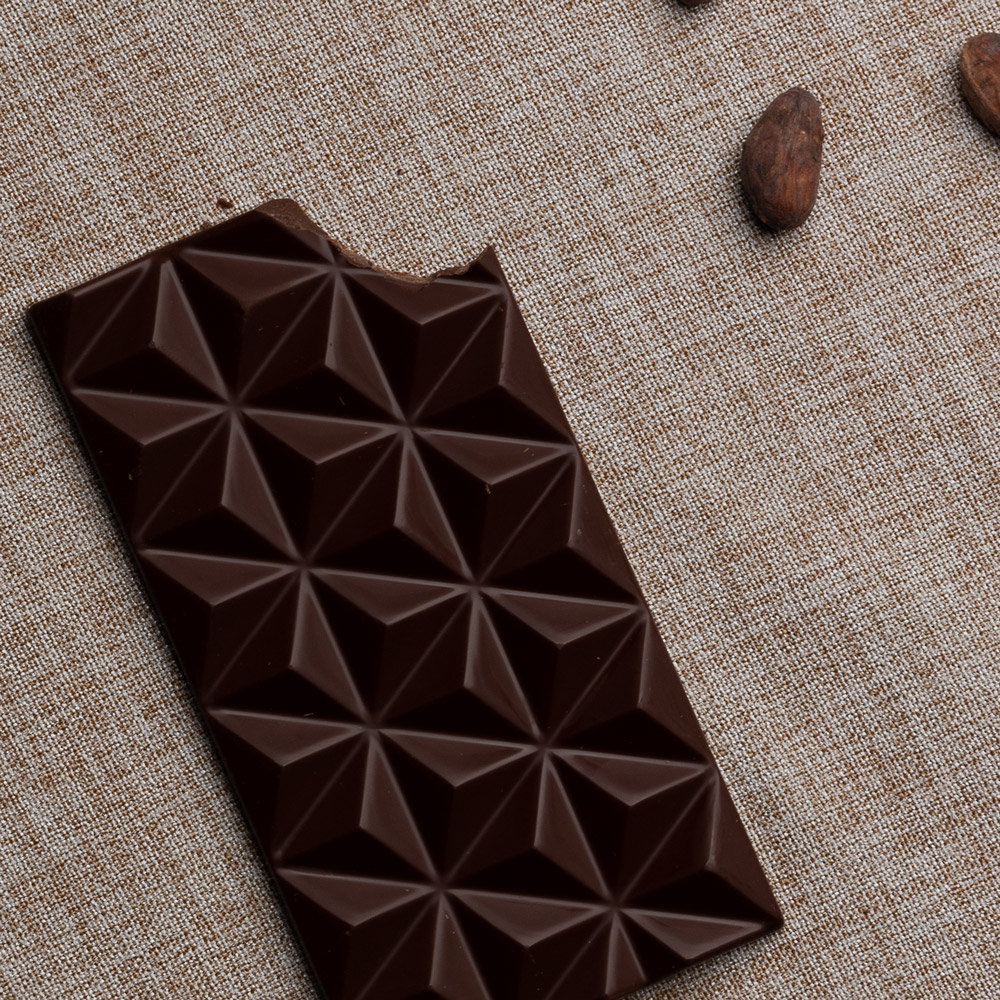
We then take the now tempered chocolate and pour it into our polycarbonate molds to create our chocolate bars or the shells for our confections. Because of the mold’s incredibly smooth finish, the chocolate will obtain a gloss that cannot be achieved via tempering alone. We then cool the bars back down to finish crystalizing them as they solidify in the molds to then pop out the individual bars.
Step 9: Packaging
We finally sticker, date and fill the package with the chocolate bar and hand-seal them. The chocolate bar is now finally ready to be consumed and enjoyed!

We hope you enjoy this labor of love that we undergo to be able to bring you the highest quality of chocolate that we have come to know and love. If you have any further questions, please feel free to contact us via our Contact Page.

A few years ago, some close friends in Mexico started to feel they needed a place where they, along with other families, could live more sustainable lives. It was late in 2019 when our dad and three close friends left on a scouting trip. Driving from one town to another, they passed through a quaint town in central Mexico where they felt to make an impromptu stop and walk down to the plaza.
Under the big tree there stood a woman selling roughly-ground Mexican-style chocolate truffles that she and her husband made from scratch to support their family. Our dad bought a few of them for us to try.


After their trip, our dad gave us some of the little bags of hand-made truffles, which we thoroughly enjoyed. With Father’s Day rapidly approaching, and a couple of families decided to get together to celebrate. So we decided to make a special dinner for our fathers. A friend had the idea of making a chocolate dessert, and somehow, buying cacao to try to recreate those little truffles seemed a necessity. The day came, and with big smiles, we were able to surprise them with our very first batch of scratch-made chocolate. Unaware of what fine chocolate making entailed, we hand-ground the whole bean, husk and all, with a mortar and pestle, giving us a similar texture to the hand-rolled truffles in Mexico. Despite our scattered efforts, our “first batch of hand-made chocolates,” they said, “was the icing on the cake to an amazing display of love and care” towards them. That night marked the first step towards something we never dreamt of happening.
Although our family has been well acquainted with foodservice for a long time –our grandfather owned a successful taqueria in Mexico, and we have been operating Muchos Tacos and Heritage Food Crafters for a while– there was something that seemed almost magical about chocolate that captivated us. We immersed ourselves into this new world, learning to discover and unlock the wide range of flavors available from genetic varieties, the distinctive delicacies of each origin, the subtleties of diverse terroirs and the significant effect distinct fermentation practices impart into the beans. We learned about roasting profiles, cracking and winnowing techniques, grinding and conching times, chocolate-making equipment, and the art of hand-tempering, among other skills.
Through countless hours of practice, experiments and modifications to roasting profiles and other chocolate making methodologies, we began to slowly develop the craft chocolate we have come to know as our current line of single-origin bars and confections. We learned the difference that stone-grinding and small batches make, that freshness was key, and that –just like with the best coffees– the time that lapses between roasting, grinding and serving significantly impacts the quality of the product. Accordingly, we learned that processing our chocolate in small batches with a stone melanger, a process that takes time and care to bring out the best possible experience, produces a true world-class chocolate. Our dad was once explaining the particulars of our process to a local friend, who, after considering what he had just heard, said:
“That’s the way of the craftsman!”
Going back to the beginning of the story, you should know that our friends eventually did move into that small town in central Mexico. They tell us to this day that it has been a transformative experience for them, their families and their community. We feel that the stop there was more than a mere coincidence, that it remains knit with our destiny. We hope that through our chocolate-making journey, you too can experience the harmony, wholeness and care we feel and pour into every one of our products as we continue to strive to make the best products for you, your family and community.


Copyright reserved. @ 2025
CHOCOLATE FACTORY
591 Halbert Lane, Waco, Texas 76705
Phone - 254-307-2961
Email - info@heritagefoodcrafters.com
200 E Bridge St, Waco, TX 76704


Recent Comments